
By Lauren Braunegg May 9, 2021
Taking a look at the power of influencers and how they helped promote #FyreFestival
It was promised to be the “cultural experience of the decade”. Instead, Fyre Festival became one of the greatest debacles of the decade. Billy McFarland, Co-Founder and CEO of Fyre Media, Inc and Ja Rule, Musician, Actor, and Co-Founder of Fyre Media, Inc had established the company to meet an industry niche. Fyre Media, Inc would allow consumers to book musicians and other artists to perform at private events. To streamline their booking platform, the team had developed a talent booking app. The co-founders decided to host a luxury music festival to promote the new software and gain additional brand awareness. With an ambitious timeline, the Fyre team got to work promoting the exclusive event. Two weekends filled with luxury accommodations, gourmet cuisine from celebrity chefs, experiential excursions, and incredible performances. If you wanted the ultimate VIP experience, you were going to Fyre Festival. Determined to rival Coachella, top influencers and models were part of the promotional video and branding materials. Industry naysayers were quickly hushed when the first-time festival sold out. However, on April 28, 2017 on the first night of Fyre Festival, it was announced that the event had been indefinitely postponed and would ultimately be cancelled. This announcement happened after hundreds of attendees had already arrived on the island. Word was that all of the musical guests had backed out the last minute as they were finding out about the true conditions of the festival site. The festival goers found soaked FEMA tents and mattresses for about a third of the attendees, nobody in charge, no electricity, no way to get home, and most shockingly no festival. Chaos ensued on the island and the world watched it unfold live on the internet. At first, it seemed like Billy McFarland had simply run out of time and money. However, there was more at play than just poor planning. After having numerous lawsuits brought against him, he was charged with two counts of fraud and is currently serving a six-year sentence.

So how did they get thousands of millennials to buy into this first-time event? Grant Margolin, Chief Marketing Officer at Fyre Media, LLC hired Jerry Media to run their event marketing and social media accounts for the festival. They created the ultimate millennial dream vacation and played into the FOMO, otherwise known as “fear of missing out” phenomenon. They flew out top influencers and models, like Bella Hadid, Emily Ratajkowski, and Haley Baldwin to film the promotional video. Due to the notoriety of the models, press started to come out about them being all together in the Bahamas, as the girls were posting photos to their own social media accounts. The Fyre team decided to do most of their promotion on Instagram and heavily rely on influencer culture. Influencers are defined by MediaKix as “…influencers are social media personalities with loyal audiences that they earned by sharing content that inspires, entertains, informs and connects them with their followers. This direct line of communication empowers influencers to generate social conversations, drive engagement and ultimately, set trends amongst a receptive and socially savvy audience.”
Fyre Festival was launched to the world on December 12, 2016 with, as Billy said in the Netflix documentary “the best coordinated social influencer campaign ever”. The Fyre Team and Jerry Media had 400 influencers across the globe simultaneously post a solid burnt orange tile on Instagram with the caption “join me @fyrefestival http://www.fyrefestival.com”. User’s feeds were sprinkled with solid orange squares, which created a distraction from the typical styled photos found in one’s social media feeds. Within 48 hours Fyre Festival reached 300 million people with this campaign. Kendall Jenner posted about Fyre Festival a few weeks later, promoting G.O.O.D. Music and offered followers a promotional code that could be used for an afterparty. That single post received over five million views and over 30,000 comments. An issue that occurred was that the ad and/or sponsored hashtags were barley used on any of the influencer content. It appeared that these influencers were promoting this festival and were giving the illusion they would be there. Ironically on April 19, 2017, less then 10 days from the event, the Federal Trade Commission sent more than 90 letters to influencers and marketers, reminding them of the rules regarding sponsored posts “…influencers should clearly and conspicuously disclose their relationships to brands when promoting or endorsing products through social media.” The Fyre Team and Jerry Media were able to effectively target their core demographic with the influencer strategy. They understood the direct communication channel influencers had with their followers. Followers are receiving what appears to be authentic messaging, as they have come to trust influencers, even more than one might trust a friend. There has been some debate how much Jerry Media knew about the unfulfilled promises and overall lies being told to the public and investors. Hulu and Netflix both created documentaries detailing the rise and fall of Fyre Festival. Eyebrows were raised when Jerry Media seemed to have a heavy hand in the editing of the Netflix version, as it had a different narrative. Unfortunately, in the end they had some questionable judgement calls that ultimately overshadowed any success they had on the communication strategy front for Fyre Festival.

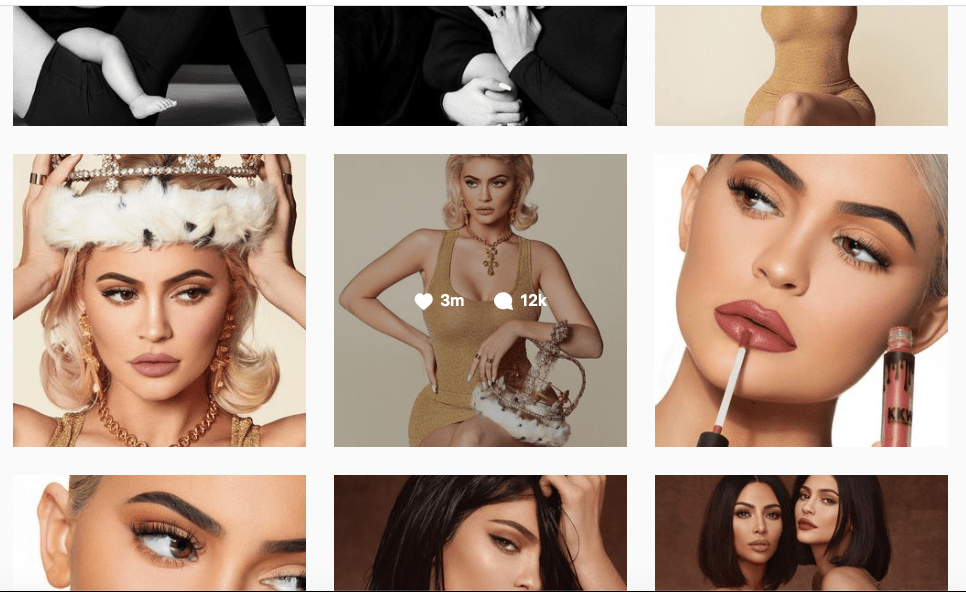
In order to fully understand the power that social media influencers have on their respective audiences through passive marketing and nonchalant posting, we need to look more closely at one of today’s most well-known and infamous influencers, Kylie Jenner. The youngest of the Kardashian-Jenner clan, Kylie is arguably one of the most influential people alive. In 2014 at the age of 17, Kylie got Juvéderm injectable dermal fillers in her lips, which threw her pout into the spotlight. Denying that she had any work done, she focused on her love of makeup and founded Kylie Cosmetics at the end of that year. A year later the company launched its first product, Kylie’s Lip Kit. Within minutes all units were sold out. Promoted heavily on her personal social media accounts, the star would livestream make-up looks, color swatches and glimpses into her fabulous lifestyle. Her strategy was for fans to not only buy into the new Kylie Cosmetics line, but Kylie, herself as a brand. Forbes did an interview with Kylie three years after the launch of Kylie Cosmetics, as she was valued at $900 million, all at the age of 20. With millions of followers watching her every move and attempting to imitate her lifestyle, Kylie started to receive backlash. Celia San Miguel told Vanity Fair that “…the makeup line glorifies her full lips, putting them front and center. The product themselves aren’t really marketed just Kylie as a beauty and style icon.” Many parents were concerned that their young daughters were being shown unrealistic beauty standards. When the #KylieJennerChallenge trend started circling, again the concern was what type of message influencers were sending young girls. Kylie, who originally got lip injections due to an insecurity was now exploiting that same insecurity in her followers in order to make millions. While she did eventually own the fact that she had her lips done, the impact was already made.
This isn’t the first time, nor will it be the last time the power of influence is used. For Kylie Cosmetics, Kylie was able to build a beauty empire out of an enhanced beauty feature and being reality royalty. Fyre Festival was able to reach an unfathomable number of people, building up hype for an event no one had heard of. Both of these examples were able to generate tremendous success due to social media influence. Each campaign relied heavily on the influencers already established brand and piggybacking off of it to promote their new venture. While there may be some questionable morals in the case of Fyre Festival and Kylie Cosmetics, both found success in their goal to penetrate the market. As new platforms get developed and new generations start interacting with social media it will be interesting to see how influencer culture will evolve and change. Until then let us continue to enjoy this Twitter treasure from Fyre Festival.
 Lauren Michelle Media